
Local pest managementHampshire · Established 2008
Local pest management · Established 2008
Office: Mon–Fri, 9am–5pm
Office: Mon–Fri, 9am–5pm
Local expertise · Discreet service
Mice at your property? We investigate the problem, explain your treatment options and help you reduce the risk of them returning.
Practical pest management for homes, businesses and rural properties, from Bentley Environmental in Stockbridge.
Not sure what is making those noises? Tell us what you have noticed and we will advise on the next step.

We look for activity, access points and the conditions encouraging mice.
Clear advice from a local technician, with unmarked vehicles for your peace of mind.
We explain practical proofing and housekeeping measures alongside treatment.
Understanding the pest
House mice live readily in and around buildings. Wood mice, also called field mice, generally live outdoors but may enter properties, particularly in colder weather. Identifying the animal helps us choose an appropriate approach.
Mice remain active throughout the year and can squeeze through gaps around 5mm wide. Small openings around services and doors therefore deserve close attention during a survey.
Look for small dark droppings, nibbled packaging, gnaw marks or nesting material in sheltered places. Mouse activity can contaminate stored food and damage materials. Similar-looking animals can be mistaken for mice, so we do not recommend treating an unidentified animal.
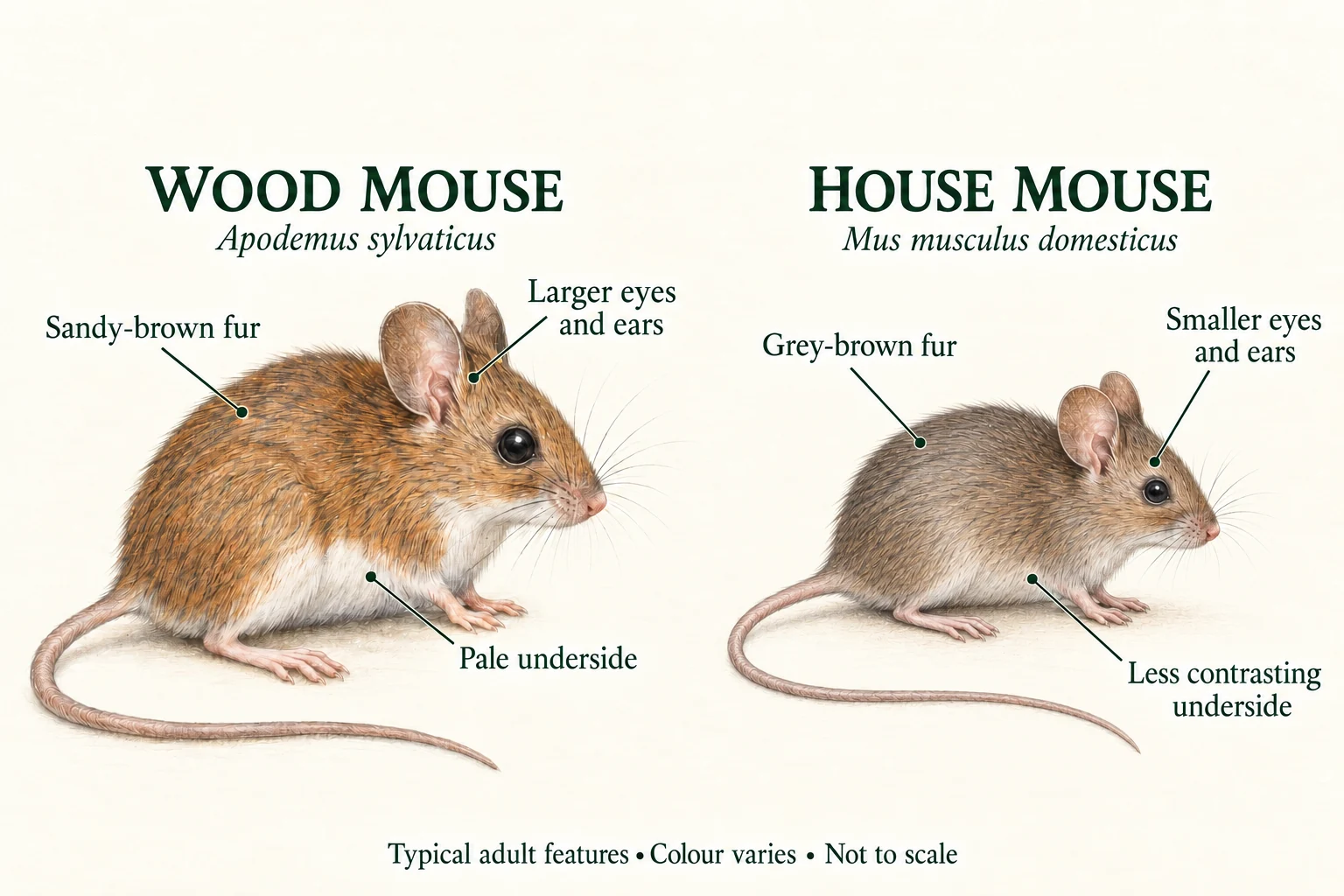
Wood mouse: typically sandy-brown above with a pale underside and relatively larger eyes and ears.
House mouse: typically grey-brown with less contrast underneath and relatively smaller eyes and ears. Appearance alone may not confirm identification.
What to look for
One sign alone may not identify the pest. A survey helps establish what is active and where it is coming from.
Noises in lofts, walls, ceilings or beneath floors, often noticed when the property is quiet.
Droppings, damaged food packaging or gnaw marks around storage areas and access points.
Shredded material in sheltered spaces, or repeated damage to stored food and packaging.
Mice seen inside or outside, or activity picked up by monitoring cameras.
How we help
We inspect the property, discuss what you have noticed and look for access points, food sources and harbourage. Cameras or further investigations may help where activity is difficult to trace.
We explain the proposed work and quotation. Depending on the findings, treatment may involve traps, monitoring and professional rodenticides where appropriate, with precautions for your property.
We review activity and adjust the approach as needed. Proofing, repairs and changes to food or waste storage can help address the conditions behind the infestation.
More than a treatment
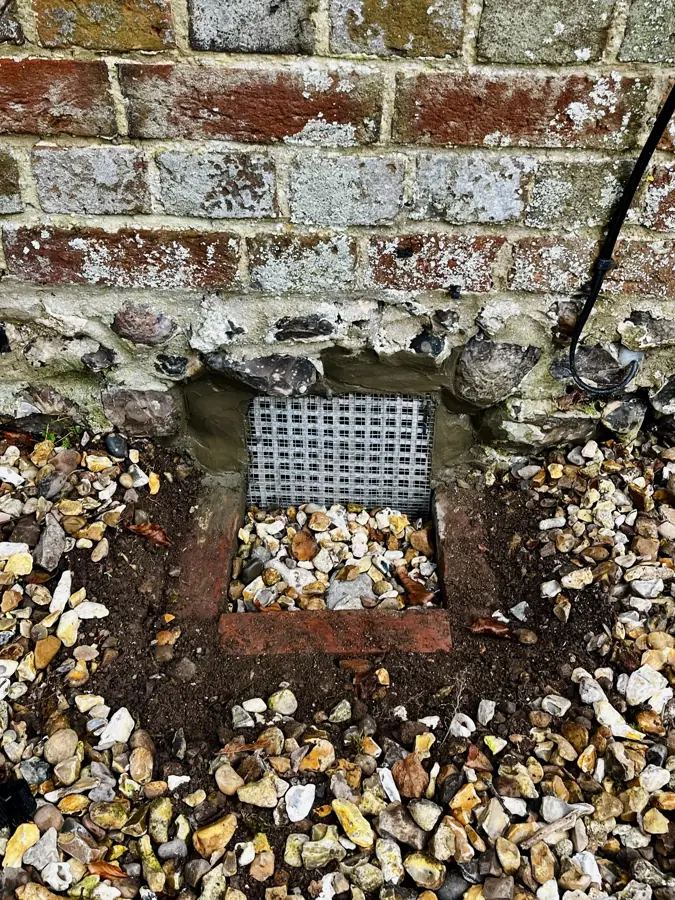
Recurring mouse activity can be linked to small gaps around pipework, damaged vents, doors and other service openings. Treating the rodents without addressing their route in may leave the property vulnerable.
We can investigate suspected access points and advise on suitable proofing. Any additional investigations, proofing or repair work will be discussed and quoted separately where required.
These photographs show two separate examples: a damaged internal vent used by mice, and mesh proofing over an external opening at another property.

We consider the site, the level of activity and risks to pets, people and wildlife when choosing a control method. Rodenticides are used where appropriate, with monitoring and advice on reducing the need for repeat treatment.
For businesses, farms and estates, regular visits can support ongoing monitoring and prevention. We can discuss a service suited to your premises and reporting requirements.
Learn about the Campaign for Responsible Rodenticide Use


Whether you need help with a current infestation or want to discuss regular cover, we start with your property and the problem you are experiencing.
Our aim is to give you clear, useful advice and an agreed plan of action.
Tell us about your propertyYes. Small access points and sheltered spaces can allow activity even in a well-kept property. We assess the building and evidence, then recommend appropriate treatment and prevention rather than assuming housekeeping is the only cause.
Timing depends on the level of activity and how rodents are entering the property. We aim to bring straightforward problems under control within around three weeks, but concealed access routes or continuing entry can take longer. We explain the expected visits after surveying the site.
Mouse control usually involves monitoring and follow-up rather than a single visit. The number of visits depends on the activity, access points and response to treatment. We discuss the proposed plan and costs with you.
Please tell us about children, pets and other animals before treatment. We assess the risks and position equipment accordingly, using secure stations where appropriate. Follow your technician's advice and do not move or handle treatment equipment.
Proofing entry points and reducing access to food, water and shelter can lower the risk of another infestation. Rodents may find new routes, so we cannot guarantee they will never return. Any additional proofing work is discussed and quoted separately.
We do not offer a catch-and-release service for mice. We will explain the control options suitable for your property.
We remove rodents caught in our equipment and investigate reported carcasses where accessible. Rodents in enclosed or inaccessible spaces cannot always be located or recovered.
It is helpful to be there for the initial survey so we can discuss the problem and access arrangements. Some later external visits may be possible while you are away, by agreement with your technician.
Practical prevention
Use robust, closed containers for dry foods and animal feed. Clear crumbs and spillages, including the spaces beneath kitchen units and around pet feeding areas.
We look at gaps around pipework, doors and other services. Proofing should use suitable materials and preserve ventilation; we explain the work needed after investigating the activity.
Accessible storage, cupboards and service voids can help us trace activity. Tell us where you have seen signs and avoid moving our monitoring or treatment equipment.
A tidy property can still experience mouse activity. Our aim is to identify how mice are gaining access and agree practical steps suited to the building.
Based near Stockbridge, we help homes, businesses, farms and estates in Winchester, Andover, Alresford and the surrounding villages. Selected locations in Berkshire and Wiltshire are considered according to the service required.
Shawford, Twyford, Kings Worthy, Littleton, South Wonston, Sparsholt, Hursley, Micheldever and Sutton Scotney.
Charlton, Enham Alamein, Thruxton, Hurstbourne Tarrant, Abbotts Ann, Weyhill and Whitchurch.
Ropley, Bramdean, Bighton, Cheriton, Tichborne, Old Alresford, Bishop’s Sutton and Itchen Stoke.
Chilbolton, Kings Somborne, Broughton, Longstock and Middle Wallop.
Unit 4, Newton Manor Farm, Stockbridge, Hampshire SO20 6BP.
Bentley Environmental was established in 2008. George brings 20 years of pest industry experience. Send us your postcode and we will confirm whether we can help.
Looking for help with rats? Visit our rat control page for signs, treatment and prevention advice.
For further independent information, read BPCA’s mouse advice, NPTA pest identification guidance and CRRU’s Code of Best Practice.
Not sure which pest you have? See our rodent control overview or squirrel control page. We can help investigate noises and signs before deciding on treatment.
Tell us what you have noticed, where the activity is and your property’s postcode. We will discuss the next step and explain the proposed work and quotation.
Send an enquiryOffice: Monday–Friday, 9am–5pm.